
“I found an injured/orphaned animal! What do I do now?”
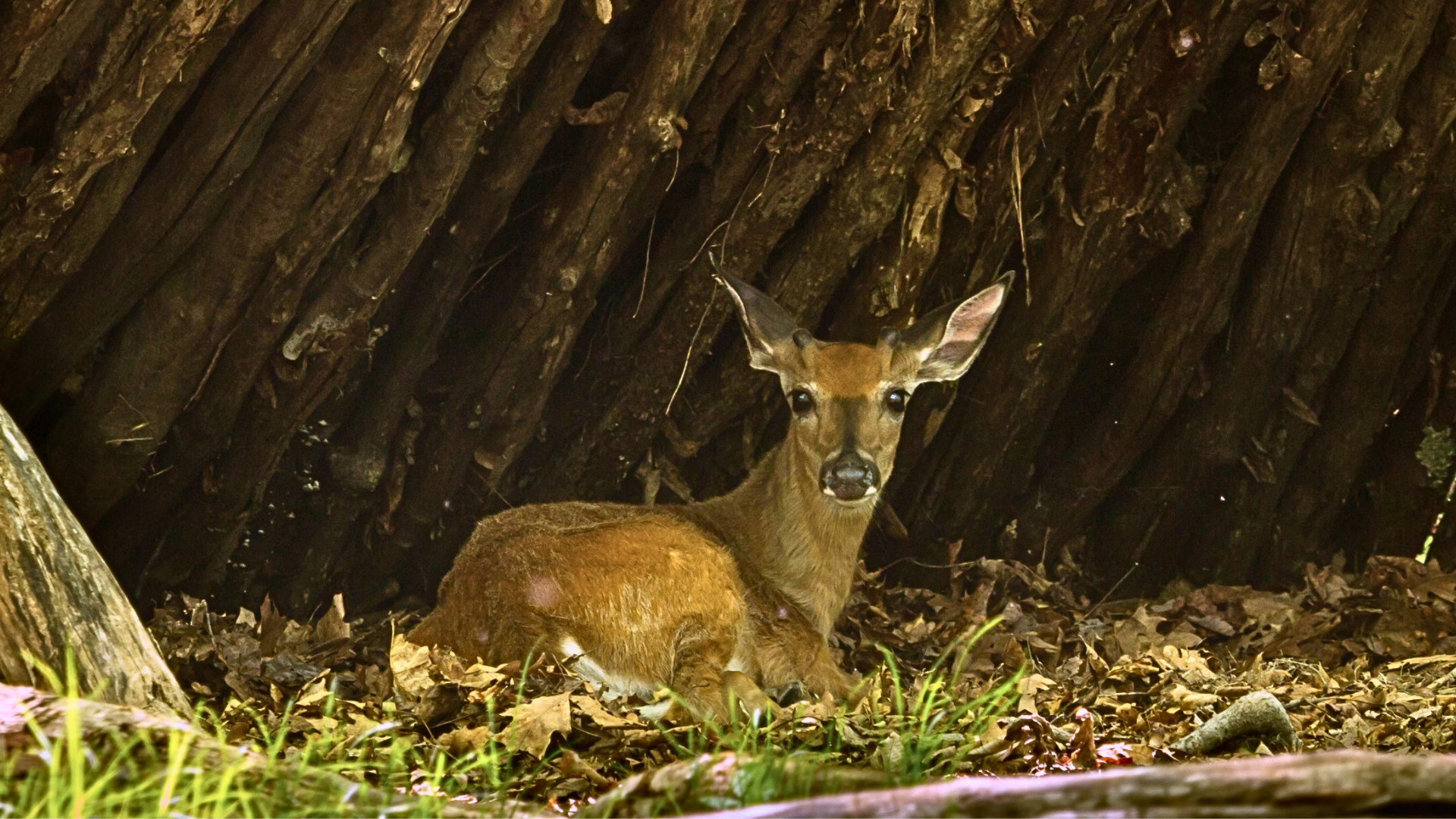
Is that animal really injured or abandoned at all? Often, when we see an animal – especially a baby animal – out and about, we feel an immediate emotional response and want to help it however we can. However, that gut reaction may cause more harm to the baby than help. Baby birds are notorious for being “rescued” when they didn’t need a rescue at all. Fawns and rabbits, too.
“If you care, leave them there,” is a good rule of thumb. But if you see blood, or broken limbs, then of course that is an appropriate time to call a rehabber.
Chemung County Wildlife Rehabilitators:
Large/Small Mammals
| Sean-Patrick Malloy | Big Flats, NY | 631-398-7003 | apemazing@gmail.com |
| Kathi Strange | Elmira, NY | 607-742-0415 | kathimstrange105@gmail.com |
| Aurora Bartley | Horseheads, NY | 607-346-0665 | albartley91@gmail.com |
| Kaitlin Joensen | Lowman, NY | 607-426-6128 | kamjo304@gmail.com |
| Katherine Nicholas | Waverly, NY | 607-215-3558 | wildthenfree@outlook.com |
| Lori Wheeler | Wellsburg, NY | 607-215-2124 | 4theloveoffinn@gmail.com |
| Sara Wilke | Horseheads, NY | 607-333-0184 | – |
Reptiles/Birds
| Kaitlin Joensen | Lowman, NY | 607-426-6128 | kamjo304@gmail.com |
| Sean-Patrick Malloy | Big Flats, NY | 607-398-7003 | apemazing@gmail.com |
| Aurora Bartley | Horseheads, NY | 607-346-0665 | albartley91@gmail.com |
Schuyler County Wildlife Rehabilitators:
Large/Small Mammals
| Stanley Sepiol & Joan Battison | Cayuta, NY | 607-739-3276 | wb3eim@gmail.com |
| Stephen Duhaime | Hector, NY | 607-229-0974 | steve.duhaime@gmail.com |
| Christina Crossgrove | Trumansburg, NY | 607-644-8771 | tina.crossgrove@hotmail.com |
| Daniel Soboleski | Trumansburg, NY | 607-220-6558 | dsoboleski@gmail.com |
Reptiles/Birds
| Marsha Zgola | Burdett, NY | 607-546-7367 | mmz2@cornell.edu |
| Shelly Schlueter | Montour Falls, NY | 607-535-6089 | wildkindcare@gmail.com |
Steuben County Wildlife Rehabilitators:
Large/Small Mammals
| Cheyenne Cornett | Bath, NY | 607-776-4298 | wildflowerwildliferehab@gmail.com |
| Laura Seeley | Dansvile, NY | 585-734-7657 | seeleystables@hotmail.com |
| Genita Hill | Greenwood, NY | 607-382-9213 | ginahill1107@yahoo.com |
| Amy Mayer | Hornell, NY | 585-472-1259 | amayer220@gmail.com |
| Brody Pragle | Prattsburgh, NY | 607-281-5245 | violet81607@gmail.com |
| Nat Smith | Prattsburgh, NY | 315-670-1390 | nat@mawrcenter.org |
| Susan Andrews | Newark Valley, NY | 607-684-8985 | susie2extreme@yahoo.com |
Reptiles/Birds
| Nat Smith | Prattsburgh, NY | 315-670-1390 | nat@mawrcenter.org |
Tioga County Wildlife Rehabilitators:
Large/Small Mammals
| Jamie Welch | Berkshire, NY | 607-309-7603 | jamiecwelch82@gmail.com |
| April Taylor | Candor, NY | 607-972-5277 | ati32008@hotmail.com |
| Kailey Holt | Tioga, NY | 607-761-5816 | kaileylscs@aol.com |
| Barbara Cole | Owego, NY | 607-687-1584 | barbara.5cole555@gmail.com |
| Margaret Hogan | Owego, NY | 607-972-9184 | maggiemay031@gmail.com |
| Anna Llewellyn | Owego, NY | 607-972-3154 | annamals2000@gmail.com |
| Sarah Mistretta | Owego, NY | 952-303-2924 | stardewhavenwildlife@gmail.com |
| Robin Lewis | Owego, NY | 909-844-4643 | stardewhavenwildlife@gmail.com |
| Denise Liske | Willseyville, NY | 607-339-6566 | deniseangeleyes@hotmail.com |
Reptiles/Birds
| April Taylor | Candor, NY | 607-972-5277 | ati32008@hotmail.com |
| Barbara Cole | Owego, NY | 607-687-1584 | barbara.5cole555@gmail.com |
| Margaret Hogan | Owego, NY | 607-972-9184 | maggiemay031@gmail.com |
| Anna Llewellyn | Owego, NY | 607-972-3154 | annamals2000@gmail.com |
| Denise Liske | Willseyville, NY | 607-339-6566 | deniseangeleyes@hotmail.com |
Tompkins County Wildlife Rehabilitators:
Large/Small Mammals
| Claire Peters from Wild By Nurture | Ithaca, NY | 607-391-1093 | Contact Form |
All Native Wildlife
| Janet Swanson Wildlife Hospital | Ithaca, NY | 607-253-3060 | Contact Form |
You can also search for rehabilitators in your area:
In NY? Search this DEC Rehibition Website, sorting by your county and the kind of animal you found
In PA? The Pennsylvania Game Commission (PGC) Northeast Office can be reached at (570) 675-1143 and (570)675-1144.
Finger Lakes Wildlife Hotline (585) 880-0168
Don’t see one in your area? Check this list
Why can’t Tanglewood take the animal?
We do not have the training to care for injured animals. Plain and simple.
Becoming a wildlife rehabber takes years of training and a license through the New York Department of Environmental Conservation.
If you are interested in learning more about becoming a wildlife rehabilitator, meeting rehabbers, and volunteering with rehabbers, the National Association of Wildlife Rehabilitators has some good resources.
Tanglewood provides a permanent home for over 40 animals. Many of our animals were placed with us through wildlife rehabilitators after they were assessed as “non-releasable.” Hank the red-tailed hawk and Sophie the great horned owl, for example, sustained wing injuries severe enough that although the rehabbers were able to get them stable – no pain – Hank and Sophie will never be able to fly well enough to survive in the wild. Another factor that can lead to an animal being deemed non-releasable is imprinting or familiarization with humans. Wild animals should be cautious and stay away from humans. If a young animal loses that fear, then it is not safe to put them back in the wild, when they may approach a human for food or not know to hide from a gun or car.
Ideally, rehabbers can bring the animals back to full health (including a healthy, natural fear of humans and cars) and release them into the wild. If the animals are non-releasable, that is where Tanglewood comes in. We are the safe, caring and enriched home for non-releasable wild animals. We have the appropriate permits to keep and care for these animals.